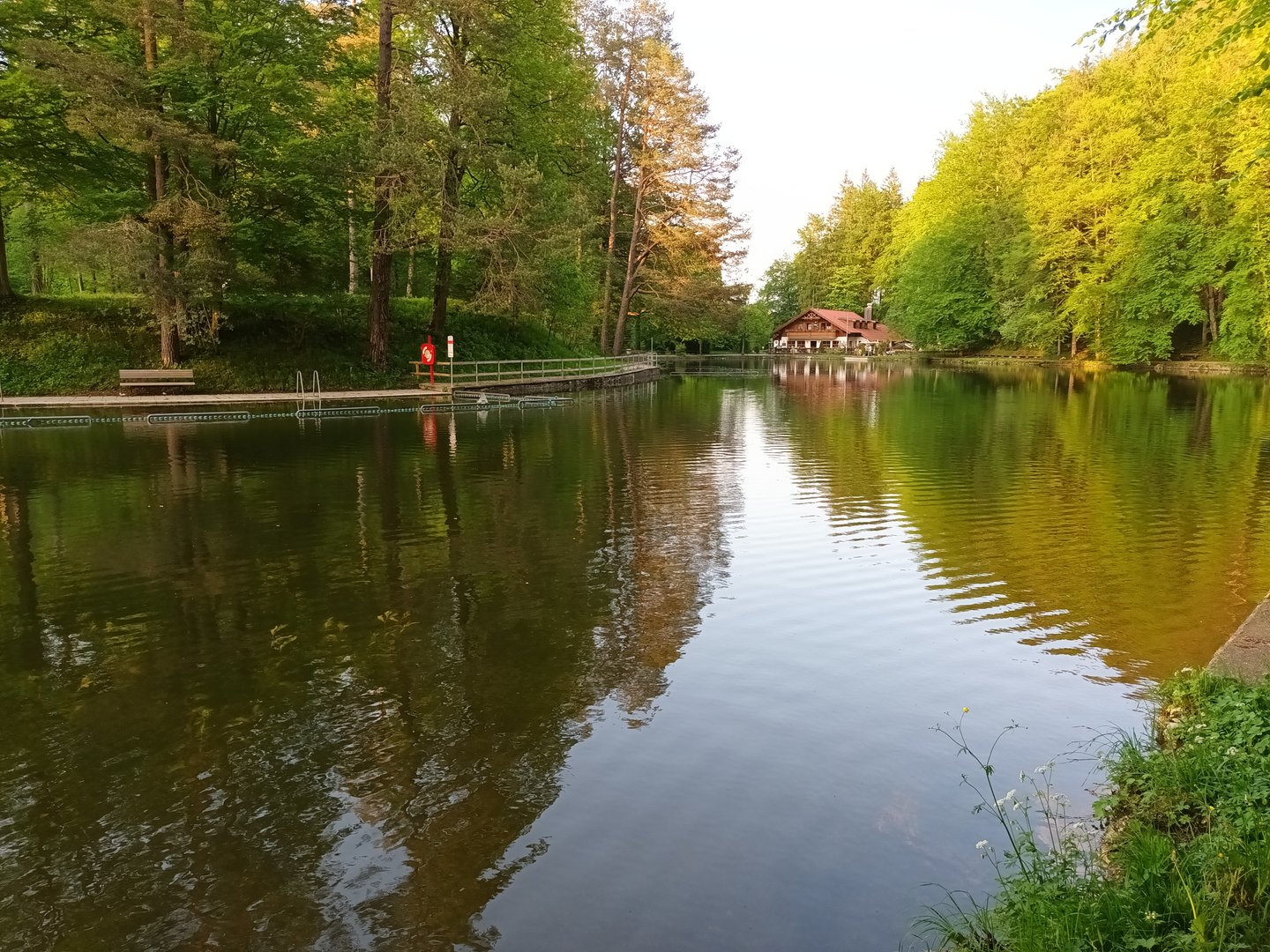
Location: Germany Bavaria Füssen
Protected karst valley near Füssen with the Mittersee and Obersee lakes, outdoor pools, a Kneipp facility and hiking trails – along the Faulenbach stream between the Alatsee and the Lech.
Interesting facts
- The Faulenbach drains the Alatsee and flows through the Mittersee and Obersee to the Lech.
- Natural bathing areas were laid out at the Mittersee and the Obersee in 1921.
- Bad Faulenbach has been a recognised Kneipp spa since 1968.
- The valley is a landscape protection area, an FFH habitat area and a bird sanctuary.
Why visit
- Two lakes with outdoor pools in a protected karst valley
- Kneipp facility and the Path of the Senses
- Hiking trails between Füssen and the Alatsee
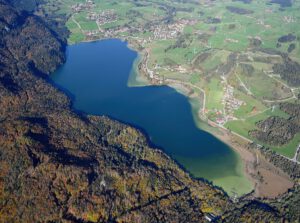
The Faulenbach valley (Faulenbacher Tal) is a hollow at the western end of the Falkenstein ridge near Füssen, in the area of the Bad Faulenbach district. The Faulenbach stream runs through the valley; it drains the higher Alatsee and flows through the Mittersee and Obersee lakes on its way to the River Lech. The valley is a karst landscape with sulphurous springs and sinkholes formed by subsurface dissolution.
Healing springs, fish ponds and forestry shaped the place early on, followed by tourism from the end of the 19th century. In 1848 a three-storey spa house was built on the site of a monastic bathhouse. In 1909 the town of Füssen acquired the former St. Mang’s Abbey and with it the valley; Faulenbach was incorporated into Füssen in 1921, and in the same year natural bathing areas were laid out at the Mittersee and the Obersee. Since 1968 Bad Faulenbach has been a recognised Kneipp spa.
Today there is an outdoor pool at each of the two lakes, as well as a Kneipp facility, the “Valley of the Senses” with its “Path of the Senses” and numerous hiking trails. Beside the lakes, north-facing climbing walls offer free climbing in summer. The Bavarian State Office for the Environment rates the area as geoscientifically very significant; it is a landscape protection area, an FFH habitat area and a bird sanctuary.
History
Spa house built in 1848 on the site of a monastic bathhouse; tourism from the end of the 19th century; the valley acquired by the town of Füssen in 1909 together with the former St. Mang's Abbey; incorporated into Füssen in 1921, when natural bathing areas were laid out at the Mittersee and Obersee; Kneipp spa since 1968.
Special features
Karst valley with sulphurous springs and sinkholes, crossed by the Faulenbach stream. The Mittersee (around 804 m according to Wikidata) and the Obersee, each with an outdoor pool, a Kneipp facility, the "Valley of the Senses", climbing walls and hiking trails.
Map
Opens an external route planner. Please check access and opening times before you set off.
Nearby
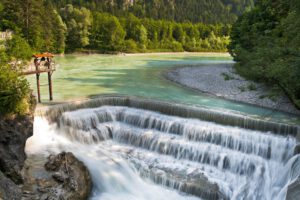
Lech Falls
Füssen, Bavaria
1.1 km away
Waterfall on the River Lech at the edge of Füssen – just under eight metres high, with a gorge, the King Max footbridge and the legendary Magnustritt.
Route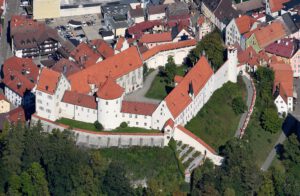
High Castle of Füssen
Füssen, Bavaria
1.5 km away
Late Gothic castle above Füssen's old town, once a seat of the bishops of Augsburg – known for the painted trompe-l'œil architecture in its courtyard.
Route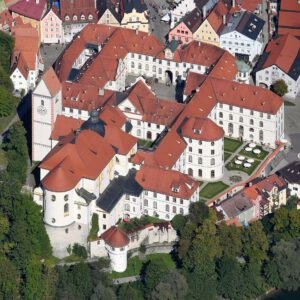
St. Mang’s Abbey
Füssen, Bavaria
1.5 km away
Former Benedictine abbey in Füssen's old town, rebuilt in Baroque style by Johann Jakob Herkomer – today home to the town hall, the town museum and the library.
Route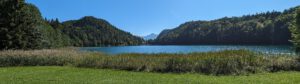
Festspielhaus Neuschwanstein
Füssen, Bavaria
3.5 km away
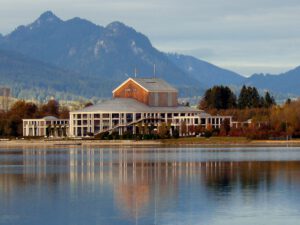
Musical theatre on the shore of the Forggensee in Füssen, opened in 2000 – its terrace looks across the lake to Neuschwanstein Castle, about four kilometres away.
Route
Sources
Image: Bruno413 · CC BY-SA 4.0 · Wikimedia Commons
