Location: Belgium Wallonia Amay
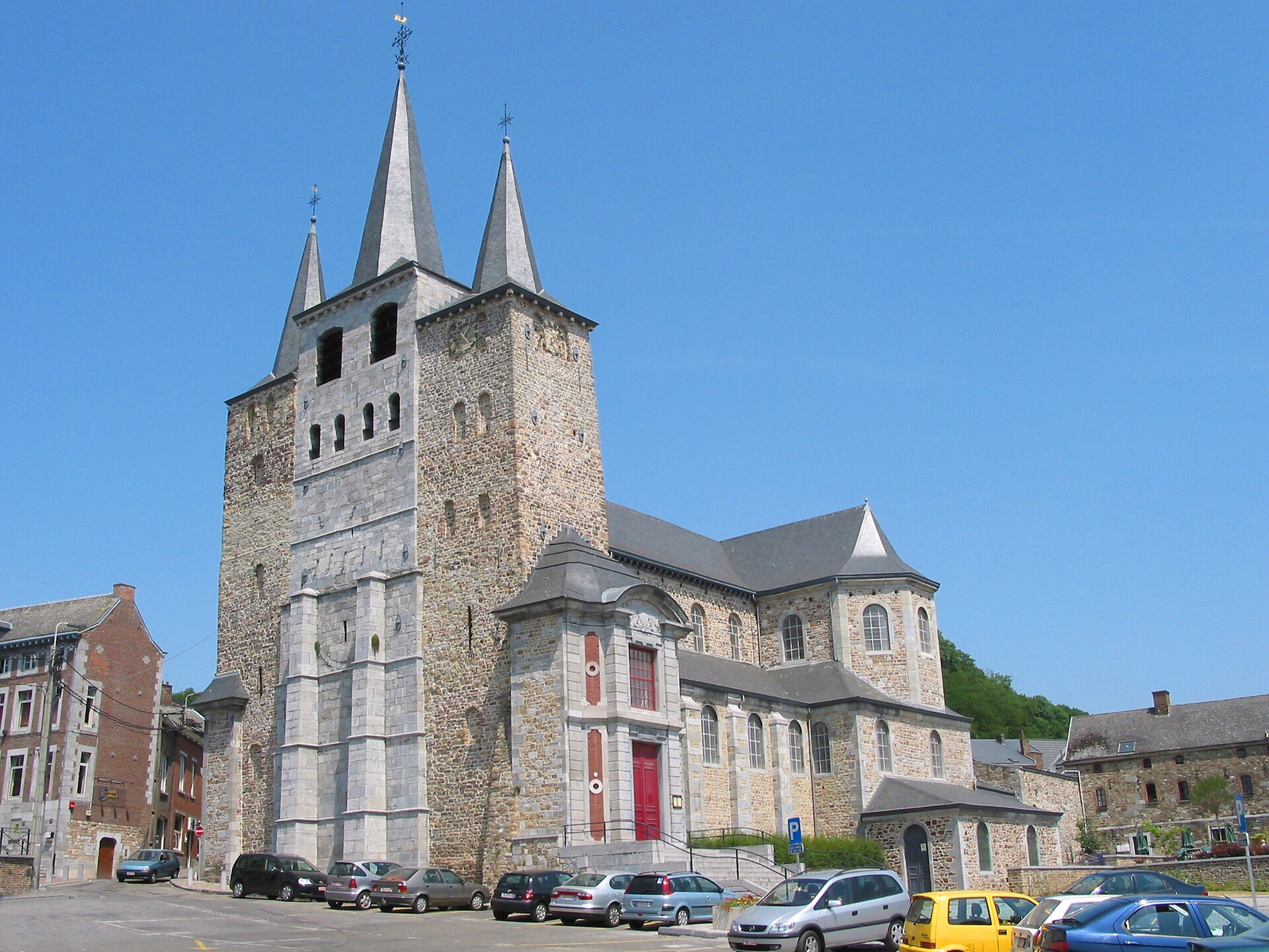
This former collegiate church in Amay, Belgium, dates back to the 6th century. Behind its Romanesque westwork it holds an 8th-century sarcophagus and a reliquary that is a masterpiece of Mosan goldsmithing.
Interesting facts
- First mentioned in 634
- Listed monument since 1933
- Sarcophagus of Chrodoara from the 8th century
- Reliquary from around 1245 to 1255
Why visit
- Romanesque westwork with three spires
- Rare works of art from the Merovingian period and the Middle Ages
- Museum of archaeology and religious art in the cloister
The Collegiate Church of Saint George and Saint Ode (French: Collégiale Saint-Georges-et-Sainte-Ode) stands in Amay in the Belgian province of Liège. Its history goes back to the 6th century. Today it serves as a Catholic parish church but still bears its historical name. The building has been a listed monument since 1933 and is part of the exceptional heritage of Wallonia.
The first church was built over the remains of a Roman building, and Saint Ode is regarded as its founder. The church is first mentioned in 634 and became a collegiate church in the 10th century. Between the late 11th and mid-12th centuries it was largely rebuilt. The two side towers of the westwork are the main survivors of this Romanesque period. The central section was raised in the 16th century, and the spires were added in the 17th. In the 18th century the church gained its present interior with stuccoed ceilings, without entirely losing its Romanesque proportions.
Its most important treasure is the sarcophagus of Chrodoara from the 8th century, discovered during excavations in the 1970s. Most scholars identify Chrodoara with Saint Ode, although this cannot be proven. The church treasure also includes a reliquary from the mid-13th century, a major work of Mosan goldsmithing. The cloister to the east of the church houses a museum of archaeology and religious art.
History
Founded in the 6th century over the remains of a Roman building; first mentioned in 634. Became a collegiate church in the 10th century. Largely rebuilt between the late 11th and mid-12th centuries. Central section of the westwork raised in the 16th century; spires from the 17th century. Extensive remodelling of the chancel, nave and interior in the 18th century. Restored from 1998 to 2001.
Special features
According to Wikipedia, the 8th-century sarcophagus of Chrodoara is the only known tombstone of this type and period to depict the deceased. The reliquary of Saint Ode and Saint George was made around 1245 to 1255 and is one of only about fifteen medieval reliquaries of this kind preserved from the Meuse region. Unusually, the cloister lies to the east of the church.
Map
Opens an external route planner. Please check access and opening times before you set off.
Sources
- Wikipedia (en): Collegiate Church of Saint George and Saint Ode
- Wikipedia (fr): Collégiale Saint-Georges-et-Sainte-Ode d'Amay
- Wikidata: Q2983961
Image: Jean-Pol GRANDMONT · CC BY 3.0 · Wikimedia Commons

Last reviewed: October 31, 2026