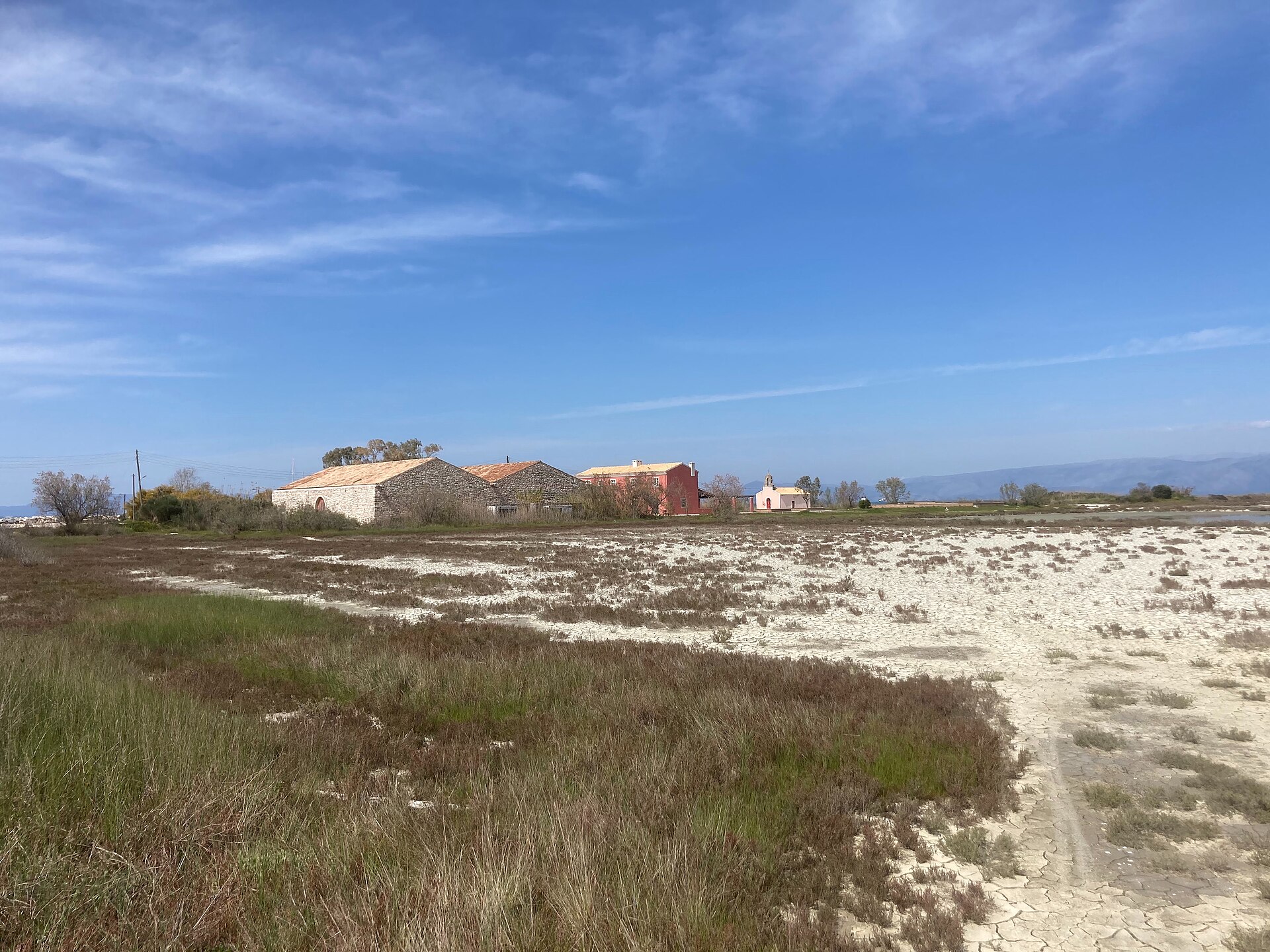
Location: Greece Ionian Islands Lefkimmi
Salt was harvested for centuries on a peninsula in the south of Corfu. Today the former saltworks of Lefkimmi are a protected area where more than 190 bird species have been recorded.
Interesting facts
- About 212 hectares of protected area
- Natura 2000 site GR2230003
- More than 190 bird species recorded
- Salt production since the 13th century
Why visit
- Greater flamingos and migratory birds in spring
- Venetian salt warehouses
- One of Corfu's most important wetlands
Alyki Lefkimmis, the saltworks of Lefkimmi, lies on a triangular peninsula in the south of Corfu, about two kilometres from the village of Lefkimmi and 42 kilometres from the island’s capital. Covering a little over 210 hectares, it is one of the most important wetlands on the island and is protected as a Natura 2000 site.
Salt was already being produced here in the 13th and 14th centuries. In the 16th century the Venetians built salt warehouses, and around 1630 most of the island’s salt came from here. The Greek state later took over the saltworks, and since 1993 the land has belonged to the municipality. Ditches from the salt-making era survive to this day. One of the warehouses, renovated between 2000 and 2006, houses Corfu’s environmental education centre, which provides information on salt production among other things.
The area is an important stopover for migratory birds. More than 190 bird species have been recorded here, including greater flamingos in spring and birds of prey such as the osprey and marsh harrier. Orchids grow among the reeds, tamarisks and salt meadows. However, port construction, illegal hunting, farming and vehicle traffic are putting pressure on the wetland.
History
Salt production as early as the 13th and 14th centuries. Venetian salt warehouses built in the 16th century; around 1630 about 21 tonnes of salt a year. After Corfu joined Greece in 1864, initially run by the municipality, state-owned from 1890 (1900 according to another source). Leased out from 1944 to 1988, owned by the municipality since 1993. Warehouses renovated from 2000 to 2006.
Special features
The peninsula ends in the north at Cape Lefkimmi, and the Lefkimmi river flows into the sea in the south. The plants include salt-tolerant species of the salt meadows and orchids such as the yellow bee orchid and tongue orchids, with centuries-old olive trees along the edges. The kingfisher also occurs here.
Map
Opens an external route planner. Please check access and opening times before you set off.
Sources
Image: Ahospers · CC0 · Wikimedia Commons

Last reviewed: November 4, 2026