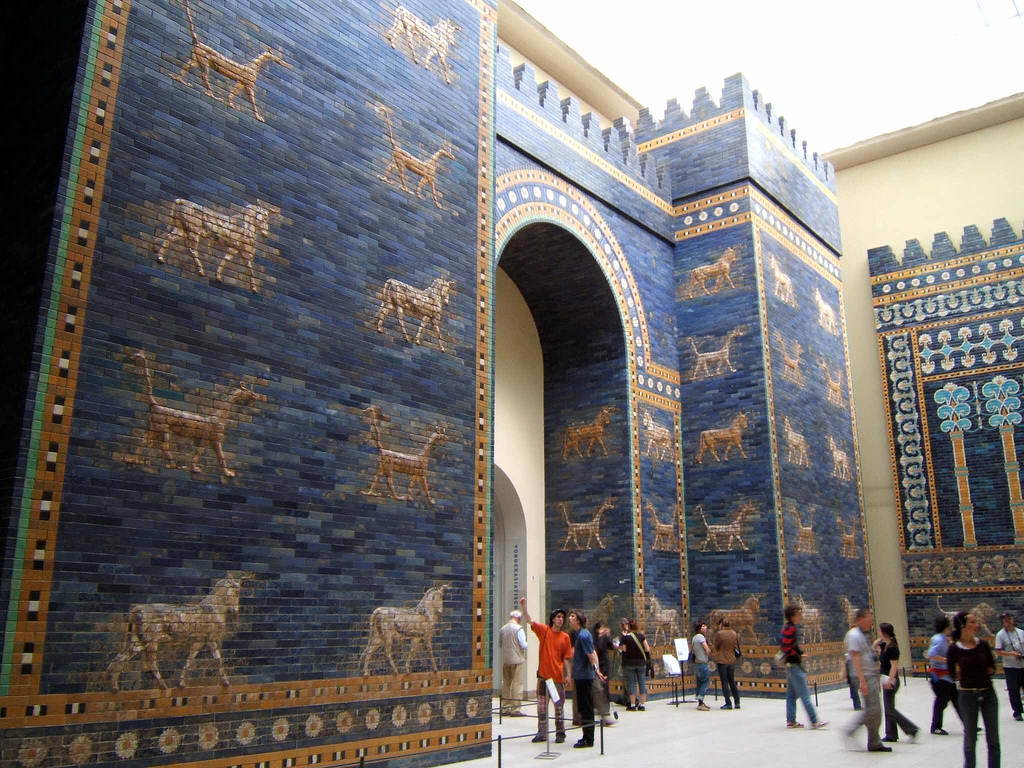
Blue glazed bricks with dragons and bulls: the city gate of ancient Babylon is one of the most famous buildings of the ancient Near East. Its reconstruction in Berlin is expected to remain closed for renovation until 2037.
Interesting facts
- Built under Nebuchadnezzar II in the 6th century BC
- About 15 metres high
- Excavated from 1899 under Robert Koldewey
- Reconstruction in Berlin since 1930, currently closed
Why visit
- One of the best-known buildings of the ancient Near East
- Brilliant blue glazed bricks with animal reliefs
- Archaeological history between Babylon and Berlin
The Ishtar Gate was one of the city gates of Babylon, the capital of Babylonia on the Euphrates in present-day Iraq. King Nebuchadnezzar II had it built in its final form in the 6th century BC and dedicated it to the goddess Ishtar. The Processional Way ran through the gate; at the New Year festival, statues of the gods were carried along it into the city.
The walls were faced with blue glazed bricks whose colour was meant to evoke lapis lazuli. In relief they show dragons, the animal of the god Marduk, and aurochs, the animal of the weather god Adad. The gate was about 15 metres high. Excavations revealed several building phases, because the level of the street was raised more than once.
From 1899 a German team led by Robert Koldewey excavated in Babylon. Hundreds of crates of brick fragments were shipped to Berlin, where the smaller front gate was reconstructed and stood in the Pergamon Museum from 1930. However, the wing housing the Museum of the Ancient Near East has been closed for renovation since October 2023; the Berlin State Museums plan to present it again from 2037. Other parts of the façade are held by museums around the world.
History
Built in several phases under Nebuchadnezzar II (605–562 BC). Excavations in Babylon under Robert Koldewey from 1899; the gate building was uncovered in 1902. Brick fragments reached Berlin before and after the First World War; the reconstruction was on display in the Pergamon Museum from 1930. This part of the museum has been closed for renovation since 23 October 2023.
Special features
The blue glazed relief bricks show dragons (mušḫuššu) and aurochs. The Processional Way was decorated with lions on glazed bricks. According to older lists, the walls of Babylon, of which the gate was part, counted among the Seven Wonders of the Ancient World.
Map
Opens an external route planner. Please check access and opening times before you set off.
Sources
- Wikipedia (de): Ischtar-Tor
- Wikipedia (en): Ishtar Gate
- Staatliche Museen zu Berlin: Sanierung des Pergamonmuseums (German)
- Wikidata: Q26082
Image: Rictor Norton · CC BY 2.0 · Wikimedia Commons

Last reviewed: November 4, 2026