Location: Belgium Wallonia Dinant
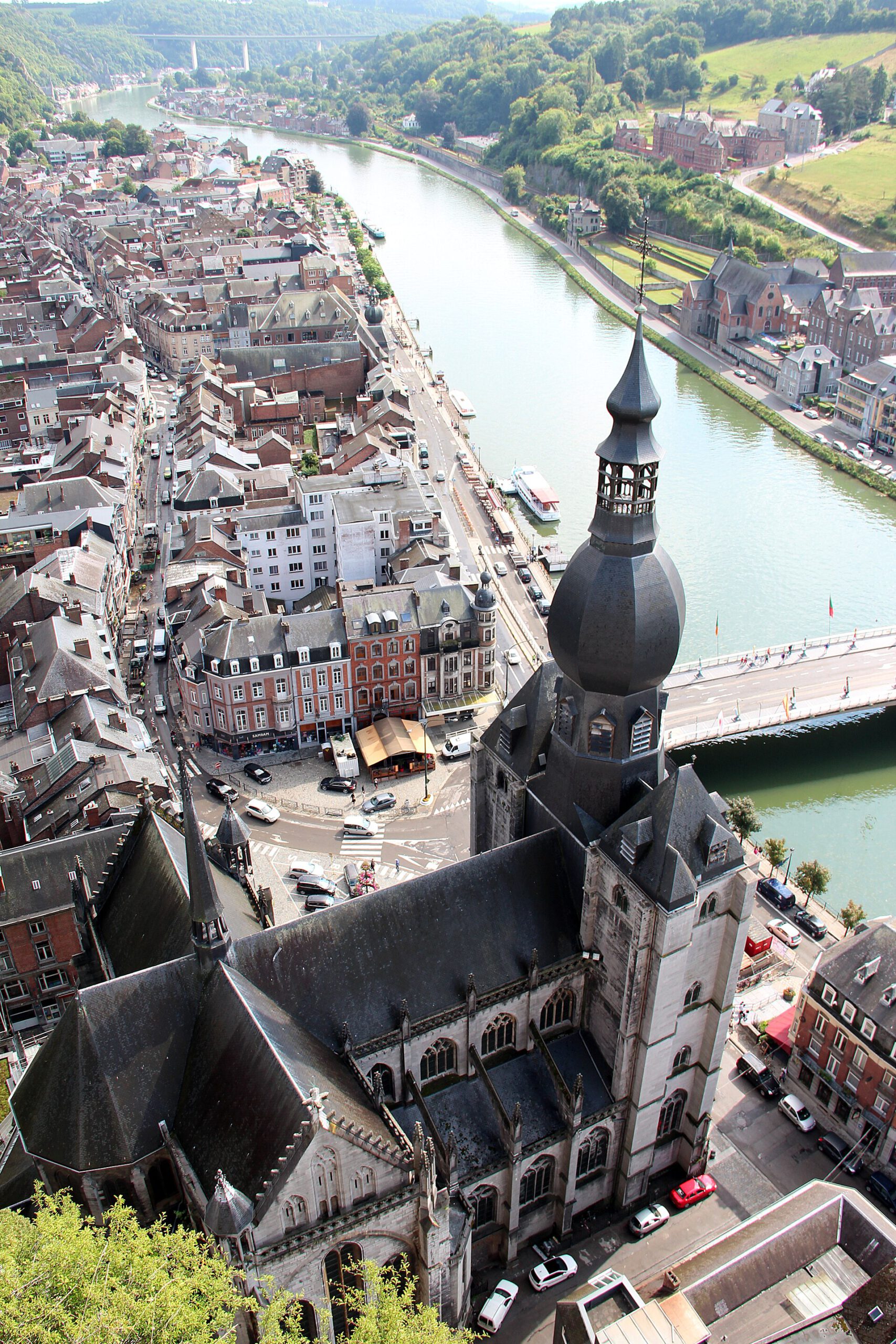
Gothic collegiate church on the Meuse with a distinctive onion-shaped spire against the cliff – Dinant's landmark, with one of the largest church windows in Europe.
Interesting facts
- On 22 December 1227 a rockfall destroyed the Romanesque predecessor church.
- The pear-shaped spire cap was added in 1556 after a fire.
- The 2014 carillon has 49 bells and weighs 3.7 tonnes.
- The baptismal font dates from the 11th century.
- A model of the church stands in the Mini-Europe miniature park in Brussels.
Why visit
- Dinant's landmark against the cliff on the Meuse
- One of the largest church windows in Europe
- Paintings by the Dinant-born painter Antoine Wiertz
- Easy to combine with the citadel directly above
The Collegiate Church of Our Lady (Collégiale Notre-Dame) stands on the right bank of the Meuse in the centre of Dinant, directly below the rock crowned by the citadel. Its small choir rests against the cliff face – an image that has become the symbol of the town. The church’s origins are not precisely known: French-language sources give 934 as the year a chapter of canons was established here; the chapter is securely documented in the 11th century.
In the 12th century a Romanesque church stood on the site. On 22 December 1227 a huge block of rock broke away from the cliff and destroyed much of the building. For the new church the builders used local limestone and followed models from Burgundy and Champagne. The choir and transept were built between 1227 and 1247, and the nave and west front were completed by 1279. The result is one of the most important churches of Mosan Gothic: a Latin-cross building about 50 metres long, with a 22-metre-high nave, a triforium and tall traceried windows.
The church’s history mirrors that of Dinant. In 1466 it burned when Philip the Good sacked the town; the vaults were renewed and the stained glass restored in 1491. After another fire the tower received its pear-shaped cap in 1556, which according to regional sources was originally intended for the town hall. In the 19th century several architects restored the unity of the 13th-century design in a long restoration campaign. In August 1914 shelling and fire during the German invasion badly damaged the church; the architect Chrétien Veraart rebuilt it from 1919 to 1923.
Inside, look out for the large window by the glass painter Gustave Ladon, which depicts the history of salvation and is counted among the largest church windows in Europe, and for paintings by the Dinant-born Romantic painter Antoine Wiertz. The baptismal font with its reliefs dates from the 11th century and now stands in the south transept. Since 2014 a carillon of 49 bells has rung in the tower. The church is still in use as a Catholic parish church and has been a listed monument since 1941.
History
Origins not precisely known (according to French-language sources a chapter of canons was established in 934); Romanesque predecessor in the 12th century, destroyed by a rockfall on 22 December 1227. Gothic rebuilding: choir and transept 1227–1247, nave and west front by 1279. Fire during the sack of Dinant in 1466, stained glass restored in 1491, onion-shaped cap after a fire in 1556, 19th-century restoration, badly damaged in 1914, rebuilt 1919–1923 by Chrétien Veraart, listed since 1941, new carillon in 2014.
Special features
Mosan Gothic church on a Latin-cross plan, about 50 metres long, 30 metres wide at the transept, nave 22 metres high. Choir set directly against the cliff, pear-shaped spire cap of 1556, large window by Gustave Ladon, paintings by Antoine Wiertz, 11th-century baptismal font, organ by Charles Anneessens (1879), carillon of 49 bells (2014).
Practical information
- Suitable for
- Visitors interested in architecture and art, city travellers, families combining it with the citadel.
- Getting there
- In the town centre on the right bank of the Meuse, below the citadel. According to regional sources, visits outside services are free; opening hours vary, so please check with the Dinant tourist office beforehand.
Details may change. Please check current information with the operator before your visit.
Map
Opens an external route planner. Please check access and opening times before you set off.
Nearby
Citadel of Dinant
Dinant, Wallonia
0.1 km away
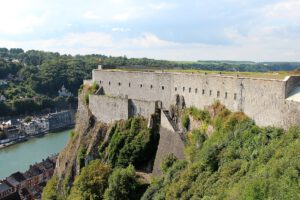
Fortress on the rock above Dinant and the River Meuse – today a museum, also reached by cable car, with views over the town and the river.
Route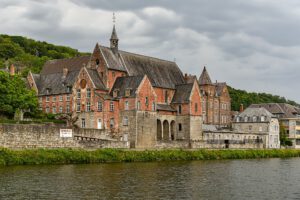
Former Capuchin Convent, Dinant
Dinant, Wallonia
0.3 km away
Early 17th-century convent on the left bank of the Meuse in Dinant – a plain complex around a cloister, today home to municipal social services.
Route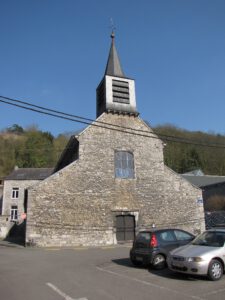
Church of Saint George, Leffe
Leffe, Wallonia
0.8 km away
13th-century church in the Leffe district of Dinant on the Meuse – with a Romanesque core and historic flood marks on its portal.
Route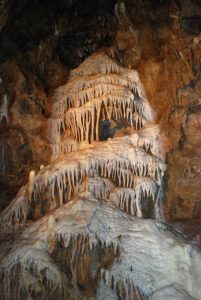
La Merveilleuse Cave
Dinant, Wallonia
0.8 km away
Show cave near Dinant, discovered in 1904 during the construction of a light railway – with calcite cascades and an underground river.
Route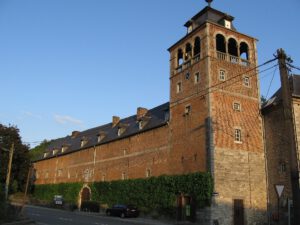
Leffe Abbey
Leffe, Wallonia
1.0 km away
Premonstratensian abbey on the Meuse in Dinant-Leffe, founded in 1152 – the namesake of the well-known abbey beer and still home to a community of canons.
Route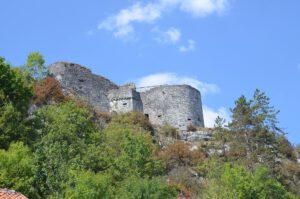
Crèvecœur Castle
Dinant, Wallonia
1.1 km away
Castle ruins on a cliff some 80 metres above the Meuse at Bouvignes – freely accessible and linked to a well-known legend of three ladies.
Route
Sources
- Wikipedia (en): Collegiate Church of Our Lady, Dinant
- Wikipedia (fr): Collégiale Notre-Dame de Dinant
- info-lux.com: La collégiale Notre-Dame de Dinant (2026)
- Wikidata: Q2228532
Image: Jean-Pol GRANDMONT · CC BY-SA 3.0 · Wikimedia Commons
