Location: Germany Bavaria Würzburg
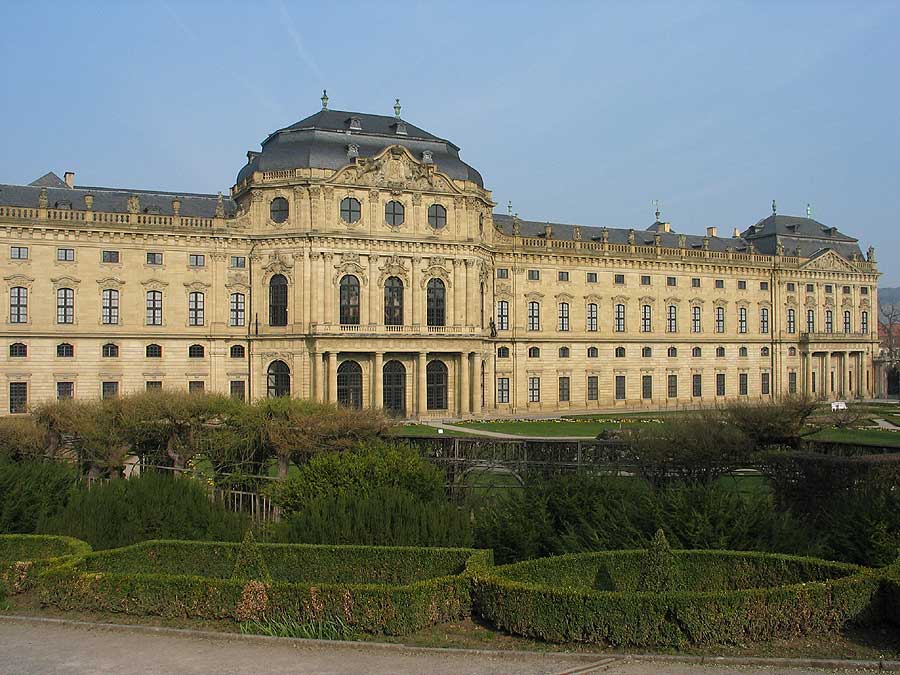
Baroque palace of the prince-bishops of Würzburg by Balthasar Neumann – with Tiepolo's huge ceiling fresco above the staircase, a UNESCO World Heritage Site since 1981.
Interesting facts
- Tiepolo's ceiling fresco above the staircase covers about 580 square metres.
- Tiepolo was paid 15,000 guilders for it.
- The vestibule is large enough for a four-horse carriage to turn round.
- Around 600 mirror panes were newly made for the restored Mirror Cabinet.
Why visit
- One of the most important Baroque palaces in Europe
- Tiepolo's world-famous ceiling fresco
- A UNESCO World Heritage Site in the heart of Würzburg
The Würzburg Residence is one of the most important Baroque palaces in Europe. The prince-bishops Johann Philipp Franz and Friedrich Karl von Schönborn had the three-wing complex built from 1720 to designs by Balthasar Neumann. The foundation stone was laid in May 1720, the shell was finished on New Year’s Eve 1744, and the interiors were completed only in 1780. The east façade alone is 167 metres long, and the palace has more than 300 rooms.
Its most famous feature is the staircase hall, 31 by 19 metres. Its ceiling bears a fresco of about 580 square metres painted by Giovanni Battista Tiepolo in 1752 and 1753. The Imperial Hall, the Mirror Cabinet and the Court Church, built between 1732 and 1743, are just as splendid. The vestibule is large enough for a carriage drawn by four horses to turn round.
The air raid of 16 March 1945 badly damaged the Residence, especially the side wings. The restoration of the rooms was completed in 1987; the Mirror Cabinet was recreated with around 600 newly made mirror panes. Together with its court garden, the Residence has been a UNESCO World Heritage Site since 1981. Today the Bavarian Palace Department shows more than 40 restored rooms, and the palace is open all year round.
History
Built 1720–1780 for the prince-bishops Johann Philipp Franz and Friedrich Karl von Schönborn to designs by Balthasar Neumann (foundation stone May 1720, shell New Year's Eve 1744, interiors until 1780). Staircase fresco by Tiepolo 1752/53. Badly damaged in the air raid of 16 March 1945, rooms restored by 1987. UNESCO World Heritage Site since 1981 (extended 2010).
Special features
Baroque three-wing palace with more than 300 rooms, east façade 167 m. Staircase hall (31 × 19 m) with Tiepolo's ceiling fresco of about 580 m², Imperial Hall, Mirror Cabinet, Court Church (1732–1743), court garden.
Practical information
- Suitable for
- Visitors interested in art and architecture, city travellers, families.
- Getting there
- In the centre of Würzburg. The rooms can be visited all year round as a museum of the Bavarian Palace Department; please check opening hours and admission with the Palace Department.
Details may change. Please check current information with the operator before your visit.
Map
Opens an external route planner. Please check access and opening times before you set off.
Nearby

Marienberg Fortress
Würzburg, Bavaria
1.3 km away
Castle and Baroque fortress about 100 metres above the Main – for almost five centuries the seat of the prince-bishops of Würzburg, today home to the Museum für Franken.
Route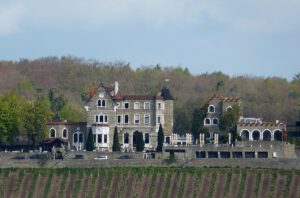
Steinburg Castle, Würzburg
Würzburg, Bavaria
2.3 km away
Castle-like building of 1897/98 high above the famous Würzburger Stein vineyard – once the clubhouse of the artists' society "Roßperger", today a hotel.
RouteHeidingsfeld Town Walls
Würzburg, Bavaria
3.3 km away
Remains of the medieval town wall of Heidingsfeld, today a district of Würzburg – built from 1368, a listed monument.
Route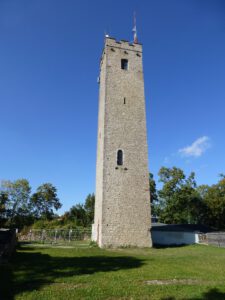
Schenkenturm (Schenkenschloss Ruins)
Würzburg, Bavaria
3.9 km away
Keep of a 13th-century castle of the Schenken von Roßberg above Würzburg-Unterdürrbach – today an observation tower open to visitors.
Route
Sources
Image: Wolfram Esser · CC BY-SA 3.0 · Wikimedia Commons
